
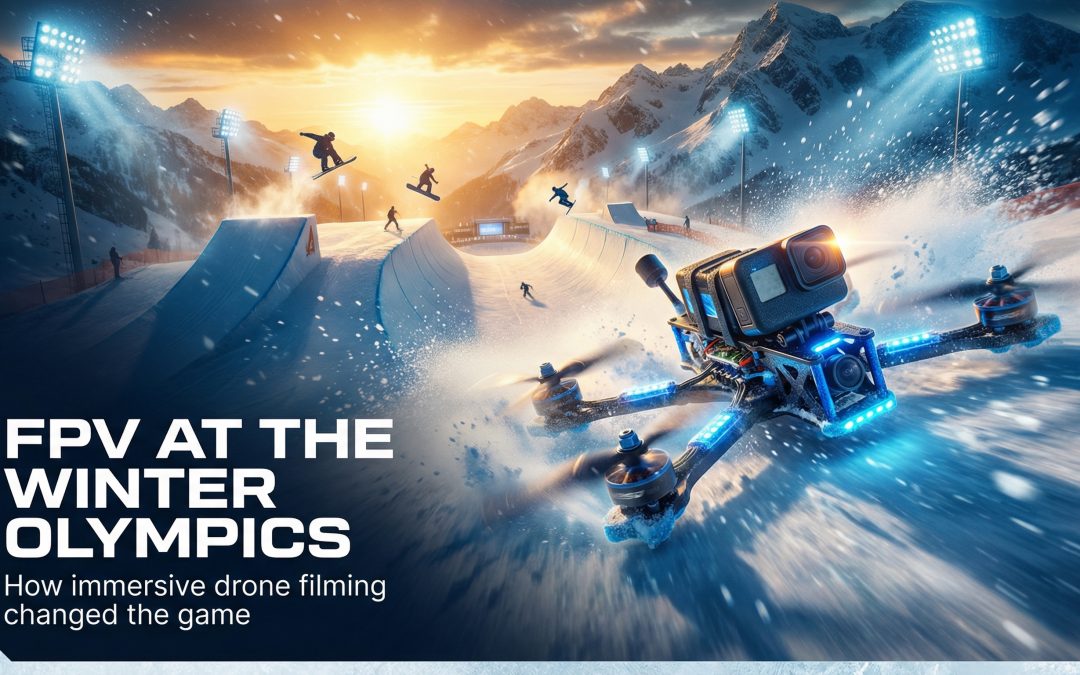
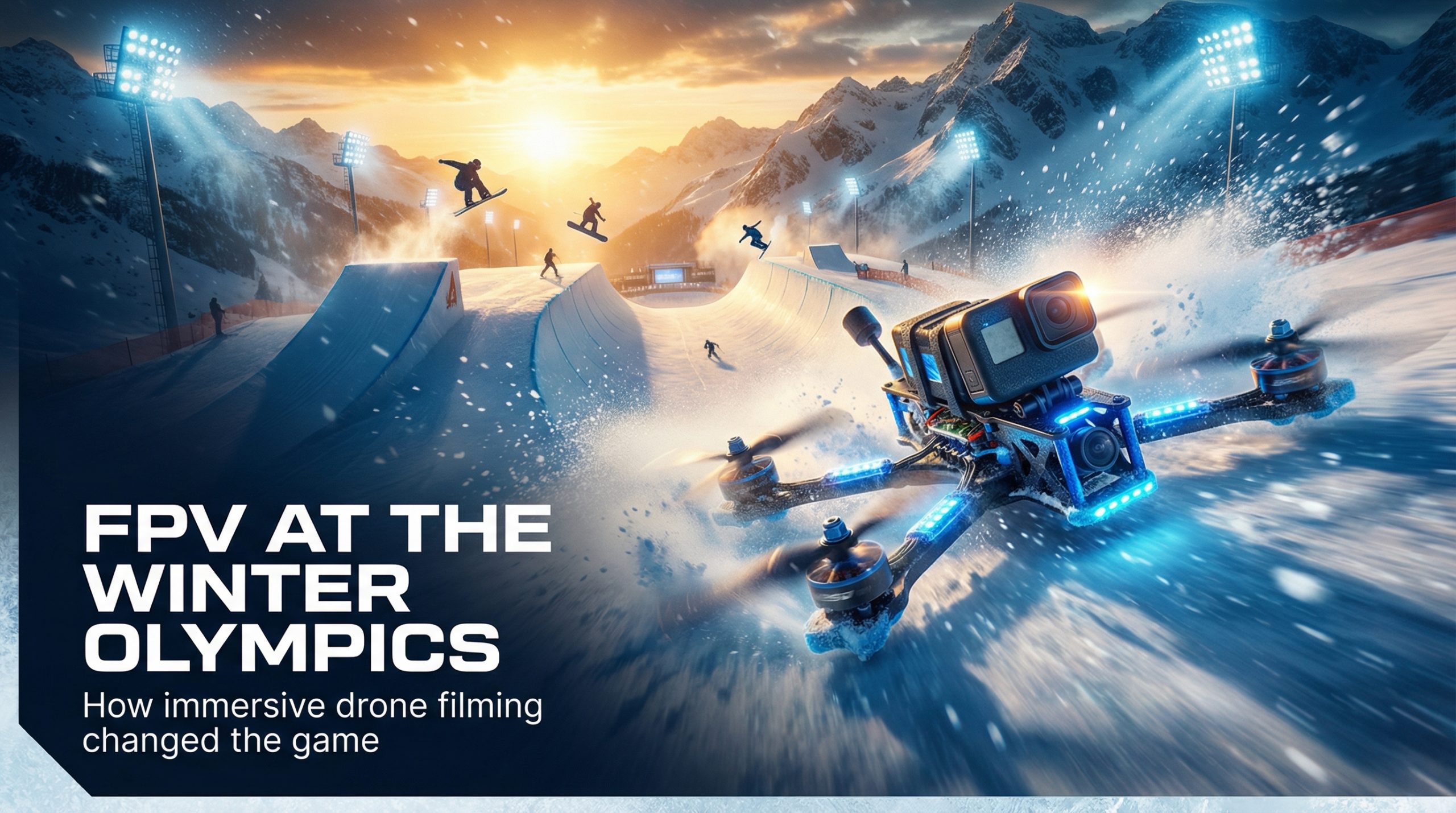
I’m sure anyone that has been watching the 2026 Winter Olympics hasn’t failed to notice the stunning FPV drone filming. Apart from poor Lindsey, it might be remembered as the biggest talking point of this games.
As someone that owns (far too many) FPV drones, I thought I’d write a quick post, diving a little further into how the Olympic drone team, Dutch Drone Gods have brought these incredible images to our screens.
FPV (First Person View) has been used in winter sports since the drones were introduced. Especially in the X Games for the Freestyle Skiing. Never before though have they been used for an Outside Broadcast on this scale.
These type of drones are pretty much always built by the pilot themselves. They have to be. Crashes happen very, VERY frequently and if you don’t know how to repair them, the sport can get prohibitively expensive, even quicker.
The drones themselves have larger, more powerful motors than the ‘usual’ consumer drones (DJI Mavic, DJI Mini). Even homemade hobbyist drones can reach speeds of 100mph in less than a couple of seconds. The pilot controls the flight by using goggles to view a live feed of the on-board camera. Becoming even reasonably skilled in FPV takes serious time and dedication, but the payoff, in both adrenaline and the quality of footage you can capture, is huge.
I can’t begin to imagine the pressure the Olympic pilots are under. I have flown commercially many times. Always in a controlled environment and usually with plenty of space and margin for error. Even then, let me tell you it’s terrifying. I’ve heard flying FPV be described as ‘Having the drone, your live and a million dollars on the line at the same time’.
Flying down a Luge tunnel six feet from an Olympian at 100kph+, with walls, crowds, and millions of people watching is way beyond something I’d even consider taking on. The Olympic pilots are truly pushing the limits of what is physically and technically possible and hats off to them.
The technology used by the drone itself is very clever. There are no re-shoots. Every second has to be captured and transmitted instantly. They’re using an encoding technology called COFDM. It uses multiple frequencies, all at the same time to create huge redundancy when sending the video.
Yes OK I’m going to mention the noise! FPV drones are loud and they can clearly be heard on the coverage. It maybe annoying to us, but they have carried out lots of testing the Olympics. The athletes are travelling extremely fast and the sound of the wind, sled, skis, combined with a helmet means that they can’t hear the drone. It looks like we’re the only ones that have to put up with the ‘droning’. The drones themselves don’t have microphones, the rotor noise would be too loud. It’s the on-course picking up the sound so there’s not a lot that can be done to get around this.
Here is a link to the Dutch Drone Gods. They’re also the team behind the Red Bull drone video that you might also have seen. They’re really on the cutting edge of what these machines can do.
https://www.dutchdronegods.com/
If you’d like to see some of my more, let’s say ‘relaxing’ FPV filming. Here is a short clip from the Gower that I filmed last year.
https://youtu.be/huGZXiUtUss?si=gTfzVMJ1j68ZERHR
This is another very short film testing out a new custom build in Pontypool
If you can think of a use case for some drone filming. Get in touch. They really can do things that other drones can’t. The only limits are the pilot’s nerves!
Speak soon,
Dave